Peren documentation
Workflows
Create and control workflow instances through a binding backed by native storage.
A workflow binding records instance state on env and lets the Worker create, read, terminate, and restart those instances. Use it when work needs a durable instance id and status that survive across requests on the same fleet storage. Prefer a queue when you only need fire-and-forget delivery.
Workflow instances
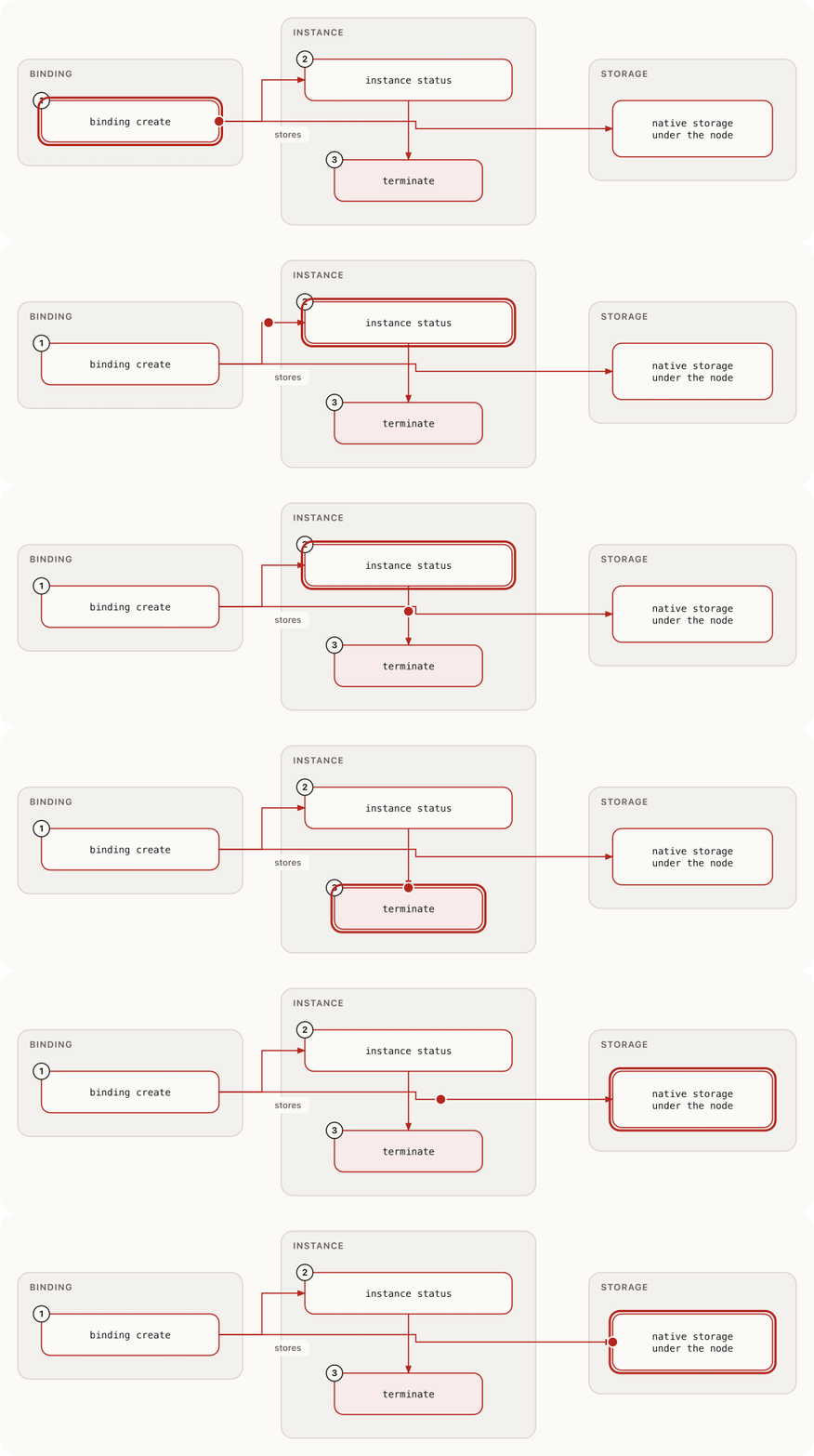
type is workflow. class_name and unique_key are required in the fleet file. They are not passed into the hydrated binding object. Instance state is written through native storage under the workflows scope. The binding’s provider.kind is native.
Methods
| Surface | Methods |
|---|---|
| Binding | create(options?), get(id) |
| Instance | status(), terminate(reason?), restart() |
create writes a running instance. Pass options.id to choose the id; otherwise Peren generates one. get returns a handle for an id without creating state. status returns the stored record, or { id, status: "unknown" } when no record exists. terminate sets status to terminated. restart sets status to running.
Configure
Create fleet.toml and worker.js.
[node]
node_id = "00000000-0000-0000-0000-000000000001"
advertise_addr = "127.0.0.1:7000"
listen = "127.0.0.1:7000"

[bucket]
kind = "file"
path = "./data"

[mtls]
ca_cert_path = "./certs/ca.pem"
leaf_cert_path = "./certs/leaf-cert.pem"
leaf_key_path = "./certs/leaf-key.pem"

[[services]]
name = "api"
worker_bundle_path = "worker.js"
compatibility_date = "2026-01-01"

[services.bindings.FLOW]
type = "workflow"
class_name = "DeployWorkflow"
unique_key = "deploy-workflow"

[[sockets]]
name = "public"
listen = "127.0.0.1:8080"
service = "api"
export default {
async fetch(_request, env) {
const instance = await env.FLOW.create({ id: "deploy-1" });
await instance.terminate("complete");
const state = await env.FLOW.get("deploy-1").status();
return Response.json({
provider: env.FLOW.provider.kind,
id: instance.id,
status: state.status,
reason: state.reason,
});
},
};Run and verify
peren devcert ./certs
peren serve fleet.toml
peren serve keeps the listen addresses and file bucket from the fleet file. peren dev binds loopback listeners on port 0 and uses a memory bucket for that session.
curl http://127.0.0.1:8080/Expected JSON includes "provider":"native", "id":"deploy-1", "status":"terminated", and "reason":"complete".
Failure
Calling status on an id that was never created returns status: "unknown". Create the instance first, or treat unknown as missing work rather than a stored failure.